OpenAI released GPT-6.2 Astra and GPT-6.2 Sol on 17 November 2026. Astra is the frontier model for the hardest projects, Sol is the efficient model for everyday work, and both are available in ChatGPT Work, in Codex and in the API from day one. For developers the short version is: Astra got 20% cheaper in the API, Sol kept its price, and you pick either one in Codex the same way you picked the previous models. Everything below was checked against OpenAI's own pages on release day.
 VibeiDEAll your agents. One Grid.Battery friendly, no 3D. 14 days free, no card.Download
What are GPT-6.2 Astra and GPT-6.2 Sol?
They are the two new top models in OpenAI's lineup, replacing GPT-6 Astra and GPT-6.1 Sol as the ones OpenAI points you to. The announcement describes them like this:
- GPT-6.2 Astra is "a frontier model built for your hardest projects". OpenAI says it sets new highs on its evaluations for professional work and scientific research.
- GPT-6.2 Sol is "an efficient and versatile model for everyday work". OpenAI says it handles multistep agentic workflows and that many of its own employees use it as their default.
OpenAI's summary of the release is better professional outputs, coding, computer use and efficiency at lower cost. Treat the performance claims as the vendor's own until independent results appear.
When was GPT-6.2 released, and who gets it?
GPT-6.2 was released on 17 November 2026, and it is available on paid plans first. The announcement says both models are available in ChatGPT Work and Codex for Plus, Pro, Enterprise and Edu users starting that day. It does not mention the Free plan.
Two details about speed:
- Ultrafast is available with either model on the Pro plan at $500 a month.
- Subscribers on the Pro plan at $200 a month get Ultrafast for the first time, starting with GPT-6.2 Sol.
In the API, both models are available now under the IDs gpt-6.2-astra and gpt-6.2-sol.
How much does GPT-6.2 cost in the API?
Astra costs $8 per million input tokens and $40 per million output tokens, and Sol costs $2 and $10. These are the standard prices on OpenAI's model pages as of November 2026.
| GPT-6.2 Astra | GPT-6.2 Sol | |
|---|---|---|
| Model ID | gpt-6.2-astra | gpt-6.2-sol |
| Input, per 1M tokens | $8.00 | $2.00 |
| Cached input, per 1M tokens | $0.40 | $0.10 |
| Output, per 1M tokens | $40.00 | $10.00 |
| Context window | 1,050,000 tokens | 1,050,000 tokens |
| Max output | 128,000 tokens | 128,000 tokens |
| Knowledge cutoff | 18 May 2026 | 1 June 2026 |
| Input | Text and images | Text and images |
Sources: the GPT-6.2 Astra model page and the GPT-6.2 Sol model page.
How that compares with the previous generation, from OpenAI's models list on the same day:
| Model | Input | Output | Change |
|---|---|---|---|
| GPT-6 Astra | $10 | $50 | |
| GPT-6.2 Astra | $8 | $40 | 20% lower |
| GPT-6.1 Sol | $2 | $10 | |
| GPT-6.2 Sol | $2 | $10 | Same price |
A few things on the model pages are easy to miss:
- Long requests cost more. Requests over 272,000 input tokens are billed at higher input, cache and output rates.
- Batch is half price. Batch runs at 50% of the standard rate, and Fast mode at twice the standard rate.
- Reasoning cannot be switched off. The API rejects requests that set reasoning effort to
none.
The per-token price is only part of the cost. OpenAI's announcement says GPT-6.2 Astra costs less than a third per task compared with GPT-6 Astra, which points to fewer tokens used per task and not only a lower rate. That is OpenAI's figure; measure it on your own tasks.
How do you use GPT-6.2 in Codex?
Pick it from the model menu, the same way as before. In the Codex CLI there are three places a model can come from, and the Codex models page documents each one:
- In a session: type
/modelto switch models or change the reasoning effort. - At launch: pass the model with
--modelor-m, which also works withcodex exec. - As your default: set the
modelkey inconfig.toml.
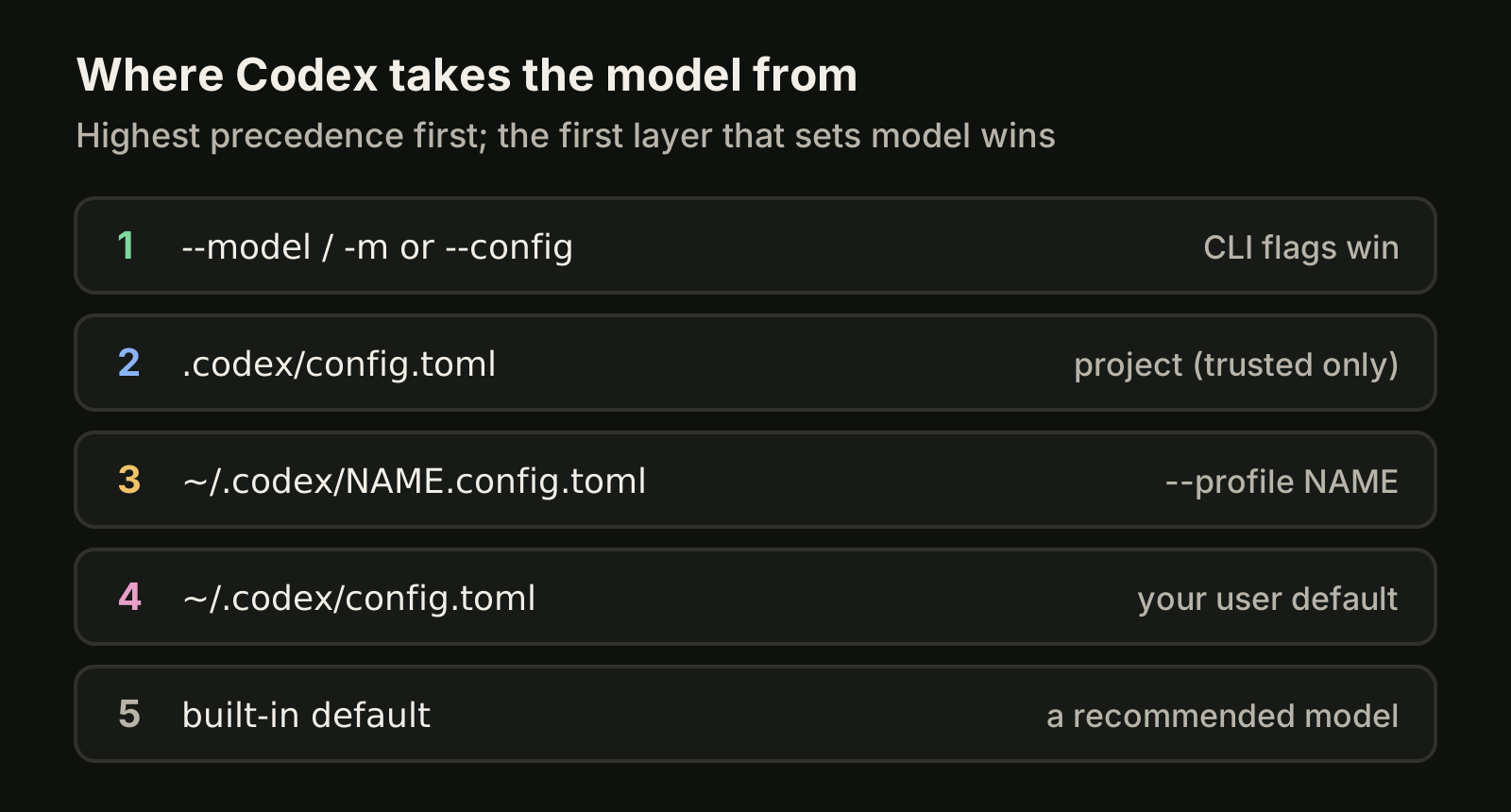
One caution on release day: when we checked on 17 November 2026, the Codex models page still listed the previous IDs (gpt-6-astra and gpt-6.1-sol) and had not been updated for GPT-6.2. The announcement gives the API IDs gpt-6.2-astra and gpt-6.2-sol. Until the Codex page catches up, the safe route is /model: choose from the list your own CLI shows, and update the CLI first if the new models are missing. Our Codex CLI install guide covers updating, and how to change the model in Codex CLI explains which setting wins when several are set.
Which reasoning effort should you start with?
Start lower than you think. The Codex models page lists Low (called Light in the app), Medium, High and Extra High, plus Max for the hardest single tasks and Ultra, which splits work across subagents.
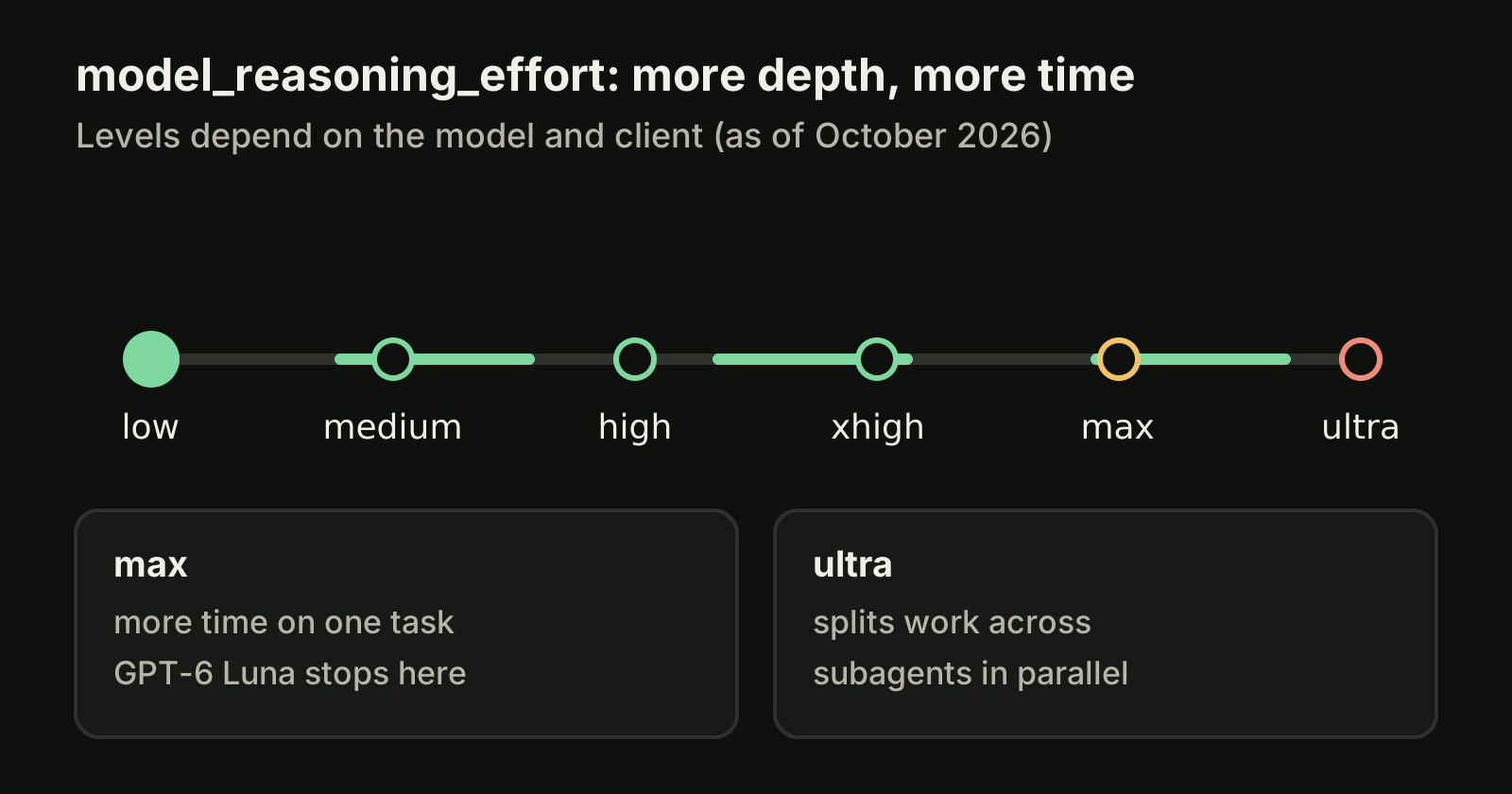
OpenAI's own usage guidance for the previous generation said higher effort uses more of your allowance and does not always produce a better result, and suggested trying Astra at Low or Medium where you had used Sol at High. Nothing in the GPT-6.2 announcement changes that advice, so it is a reasonable starting point for the new pair too.
Should you use Astra or Sol for coding?
Use Sol by default and Astra when the task is hard enough to justify it. That follows directly from how OpenAI positions them and from the price: Astra's output tokens cost four times Sol's in the API.
| Task | Start with | Why |
|---|---|---|
| Routine changes, tests, refactors with a clear scope | Sol | Cheaper, and built for everyday agentic work |
| Large change across an unfamiliar codebase | Astra | OpenAI's pick for the hardest projects |
Long scripted runs with codex exec | Sol | Cost adds up over many runs |
| Review of a risky plan or diff | Astra, or a different vendor's model | A second model catches different mistakes |
For that last row, our guides to the Codex plugin for Claude Code and Codex vs Claude Code show how to put two models on the same change.
What happens to your Codex usage limits?
Your plan's limits still apply, and OpenAI had not published GPT-6.2 figures when we checked. The usage help article still described the previous models on 17 November 2026: on Plus, an estimated 5 to 45 local messages per five hours for GPT-6 Astra and 15 to 160 for GPT-6.1 Sol, described as estimates and not guaranteed counts.
If GPT-6.2 really finishes tasks with fewer tokens, the same allowance should go further, but that is not confirmed in numbers yet. Check your own usage after a day of work: our Codex usage limits guide shows where to look, and the Codex rate limits page covers planning around the windows.
Can you use GPT-6.2 in VibeiDE?
Yes, as soon as your Codex CLI offers it. VibeiDE is a desktop app for macOS, Windows and Linux that coordinates the Codex, Claude Code and OpenCode CLIs you already installed, and its Codex model menu is read from your own Codex installation. So when your Codex version lists GPT-6.2 Astra and Sol, they appear in VibeiDE without waiting for a VibeiDE update. Each user signs in to their own provider accounts, each project has its own task queue, and finished tasks wait in Ready for review, which is a practical way to compare the two models on the same kind of task. More for Codex users.
Our weekly model benchmark gives the baseline to beat. Its run of 16 November 2026 predates GPT-6.2 and shows the previous models: GPT-6.1 Sol at 75.8 and GPT-6 Astra at 75.3.
Takeaways
- GPT-6.2 Astra and Sol were released on 17 November 2026 for Plus, Pro, Enterprise and Edu in ChatGPT Work and Codex, and in the API.
- API prices: Astra $8 in and $40 out per million tokens (20% below GPT-6 Astra), Sol $2 and $10 (unchanged).
- Both have a 1,050,000-token context window and 128,000 output tokens.
- In Codex, pick them with
/model. The Codex models page had not listed the new IDs on release day. - Start with Sol and a lower reasoning effort, and move to Astra for the hardest work.
- VibeiDE shows the models your Codex CLI offers, so no app update is needed.