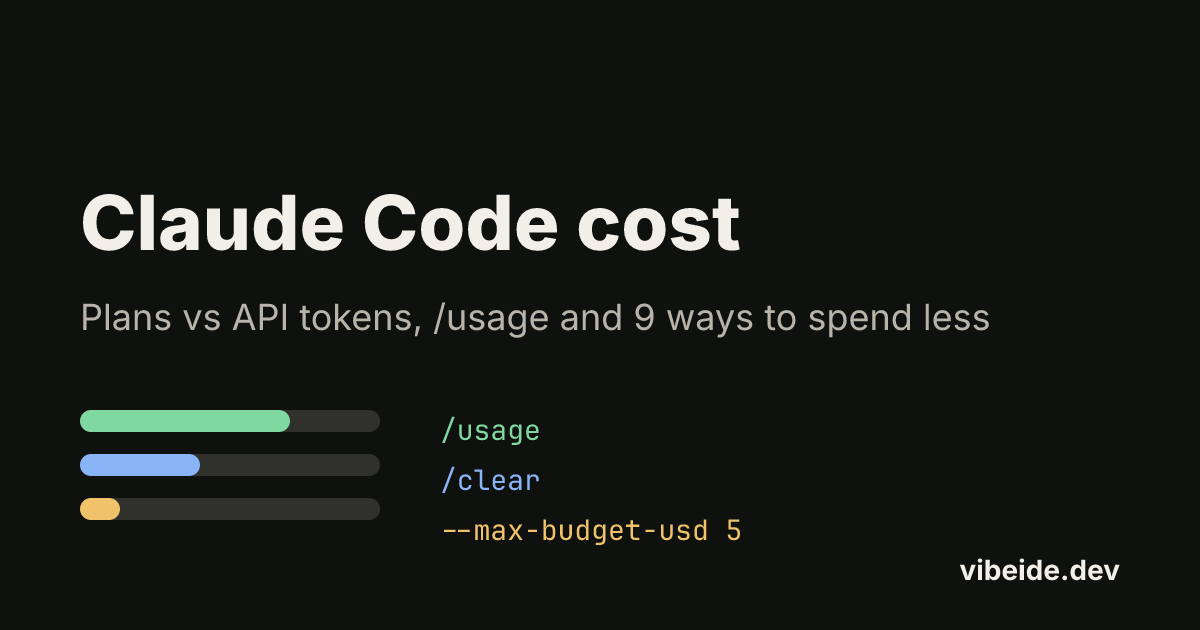
Claude Code cost depends on one question before any other: are you paying through a Claude subscription or per token through the API? The same coding session can be "included" on one path and cost real dollars on the other. This guide explains both billing paths with current prices, how to see what a session costs with /usage, how teams cap spend, and the habits that cut token use the most.
Every price, command and number below was checked against the official Claude Code cost documentation, the Claude pricing page and the CLI reference as of October 2026. Prices change, so check those pages before you budget.
How Claude Code is billed
Claude Code charges by token consumption, but who pays for those tokens depends on how you signed in.
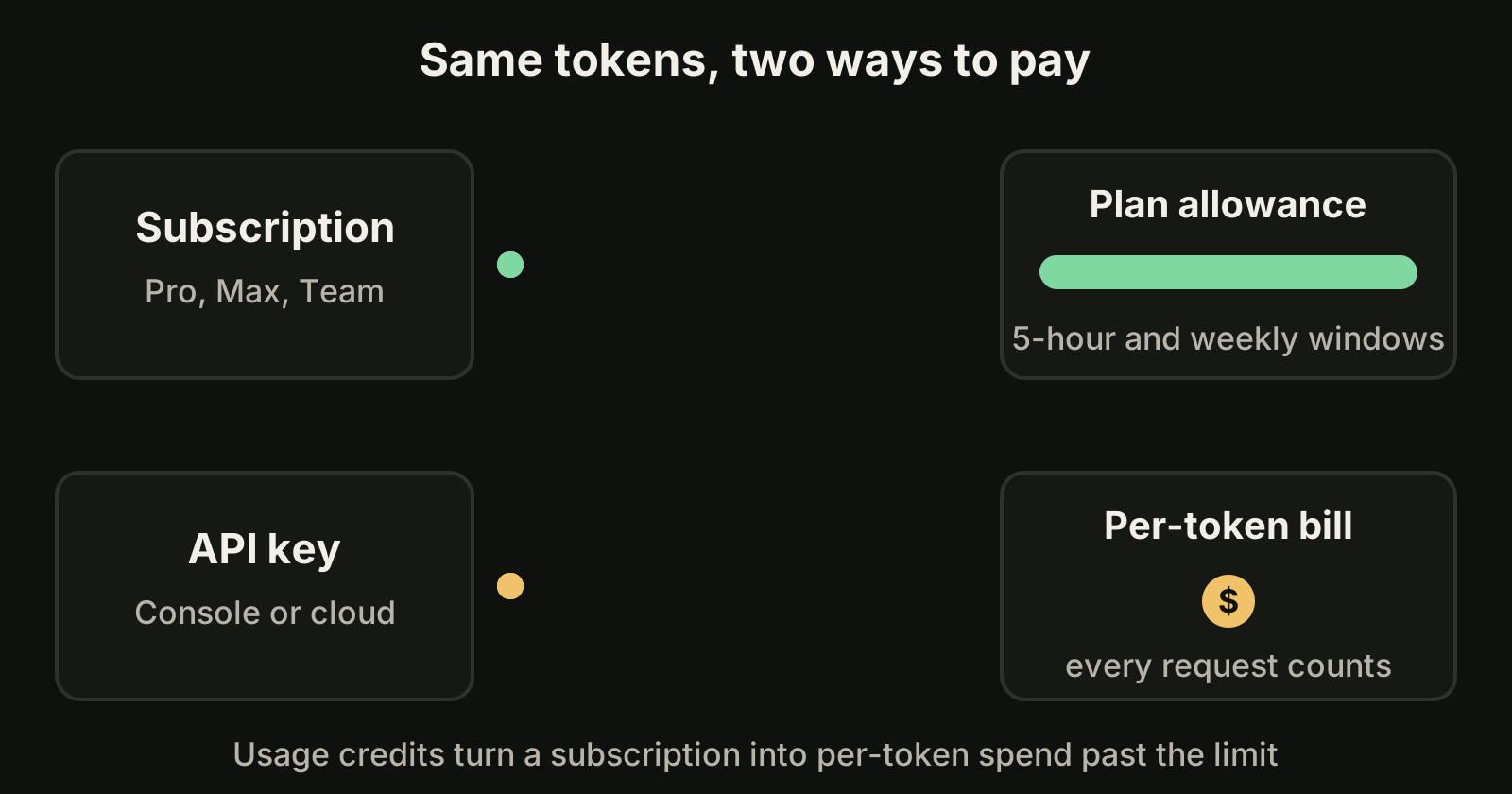
On a subscription (Pro, Max, Team or Enterprise), your usage draws from a plan allowance. On Team and Enterprise the cost docs describe a per-seat allowance that resets on a rolling five-hour window and a weekly window, shared with Claude chat. You do not get a per-token bill until you turn on usage credits to keep working past the allowance.
On the API (a Claude Console account, Amazon Bedrock, Google Cloud or Microsoft Foundry), every token is billed to your organization. Here a long session is a direct line item.
If you sign in with claude auth login --console, you choose API billing instead of your subscription, so check which method you are using with claude auth status.
Subscription prices as of October 2026
These are the plans that include Claude Code, from claude.com/pricing:
| Plan | Price | Claude Code |
|---|---|---|
| Pro | $20 per month, or $17 per month billed yearly ($200 up front) | Included |
| Max | From $100 per month (5x and 20x tiers) | Included |
| Team Standard seat | $25 per seat per month, $20 billed yearly | Included |
| Team Premium seat | $125 per seat per month, $100 billed yearly | Included |
| Enterprise | $20 per seat per month billed yearly, 20 seat minimum, plus usage at API rates | Included |
The Free plan does not include Claude Code. When you hit a plan limit, the docs list three options: wait for the window to reset, continue the interrupted task automatically after the reset, or use usage credits. Our guide to Claude Code usage limits covers the session and weekly windows in detail.
API token prices as of October 2026
On the API, cost is tokens multiplied by the model's rate. Per million tokens, from the same pricing page:
| Model | Input | Output | Cache read | Cache write |
|---|---|---|---|---|
| Opus 5.5 | $4 | $20 | $0.20 | $5 |
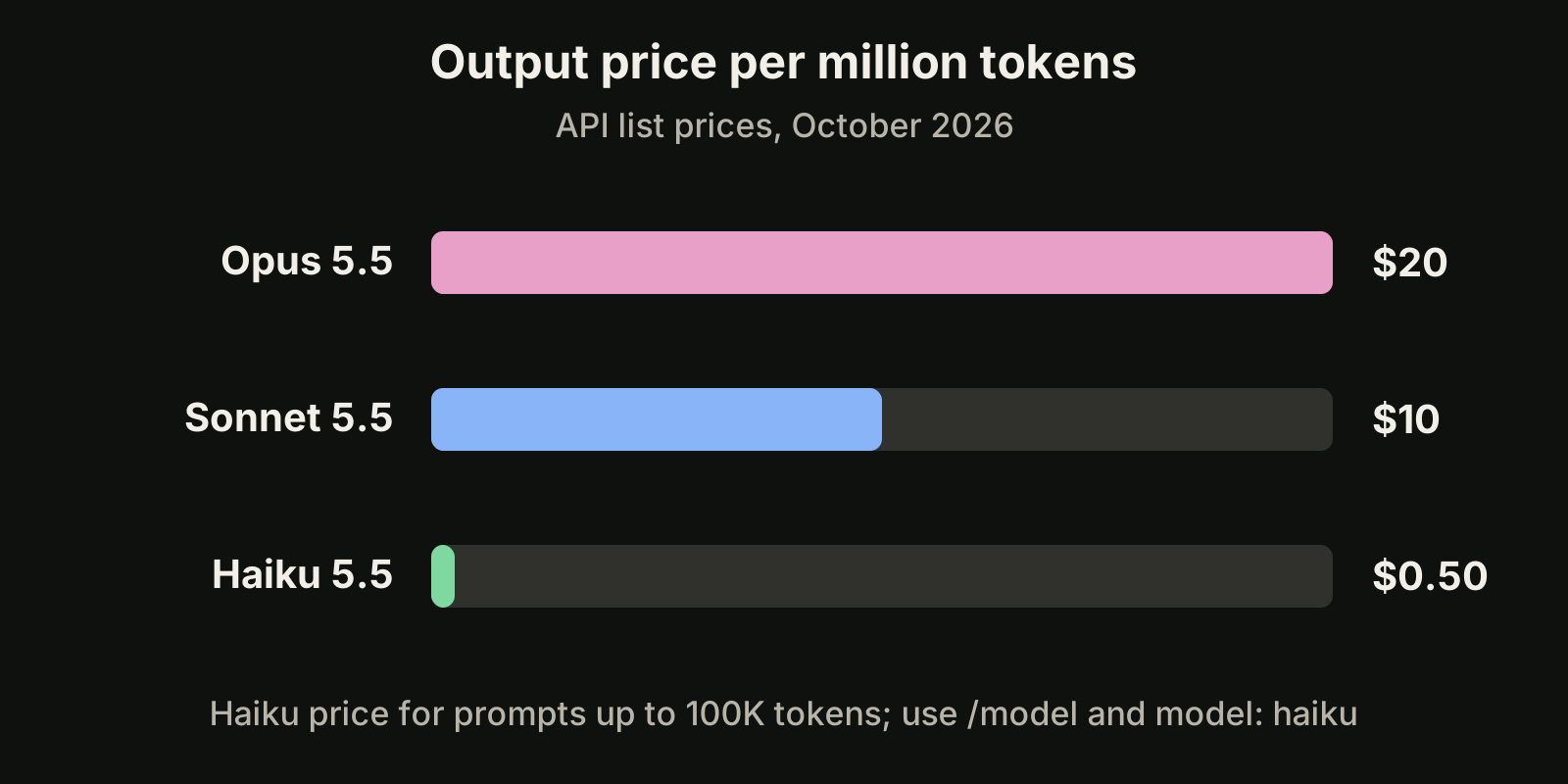
| Sonnet 5.5 | $2 | $10 | $0.10 | $2.50 |
| Haiku 5.5 (prompts up to 100K tokens) | $0.10 | $0.50 | $0.01 | $0.125 |
The cache columns matter more than they look. Claude Code resends your conversation with every request, and prompt caching lets most of it come back at the cache read rate. On Sonnet 5.5 that is $0.10 per million tokens instead of $2.
What a developer typically spends
The cost docs give enterprise averages for API-billed use: about $13 per developer per active day and $150 to $250 per developer per month, with 90% of users staying below $30 per active day. Your number depends on the model, the codebase size and how many instances or automations you run.
The docs recommend starting with a small pilot group and measuring a baseline before a wider rollout. That advice applies to individuals too: measure a normal week before you pick between Pro, Max or API billing.
Check what a session costs with /usage
Type /usage inside Claude Code. The Session block shows the estimated cost, API and wall time, code changes and tokens per model:
Total cost:            $0.55
Total duration (API):  6m 20s
Total duration (wall): 6h 33m 10s
Usage by model:
   claude-sonnet-4-6:  1.2k input, 5.3k output, 940.0k cache read, 50.0k cache write ($0.55)
That example from the docs shows the pattern most sessions follow: cache reads dwarf everything else. A few details worth knowing:
- The dollar figure is computed locally at list price, so treat it as an estimate. Authoritative API billing lives on the Claude Console usage page.
- On Pro and Max the session cost is not what you pay. Subscribers also get plan usage bars and a breakdown that attributes recent usage to skills, subagents, plugins and MCP servers. Press
dorwto switch between 24 hours and 7 days. - The totals reset when
/clearstarts a new session.
To keep the cost visible all the time, the status line exposes the same cost field. Our Claude Code statusline guide shows a script that prints it.
Cap spend in scripts with --max-budget-usd
For headless runs, --max-budget-usd stops the run once estimated API spend reaches your amount. It works in print mode only:
claude -p --max-budget-usd 5.00 --max-turns 20 "fix the failing tests in src/auth"Spend from subagents counts toward the cap, but the docs warn that spend can pass the cap, so leave headroom. --max-turns adds a second limit on agentic turns. See our Claude Code headless mode guide for the rest of the -p flags.
Where team spend is controlled
The right control depends on how your organization reaches Claude Code:
| Setup | See spend | Cap spend |
|---|---|---|
| Team or Enterprise plan | Spend report in org analytics | Spend limits in admin settings, on top of the seat allowance |
| Claude Console (API) | Console usage page | Workspace spend limits |
| Bedrock, Google Cloud, Foundry | Your cloud billing console | Your cloud's budget controls |
Console users get an automatic "Claude Code" workspace for tracking. For per-user numbers on any setup, the docs point to OpenTelemetry export. Admins who pay contracted rates can set the modelPricing managed setting so /usage and the status line report those rates instead of list price.
Nine ways to cut Claude Code cost
The cost docs list the habits that reduce token use. These have the largest effect in practice:
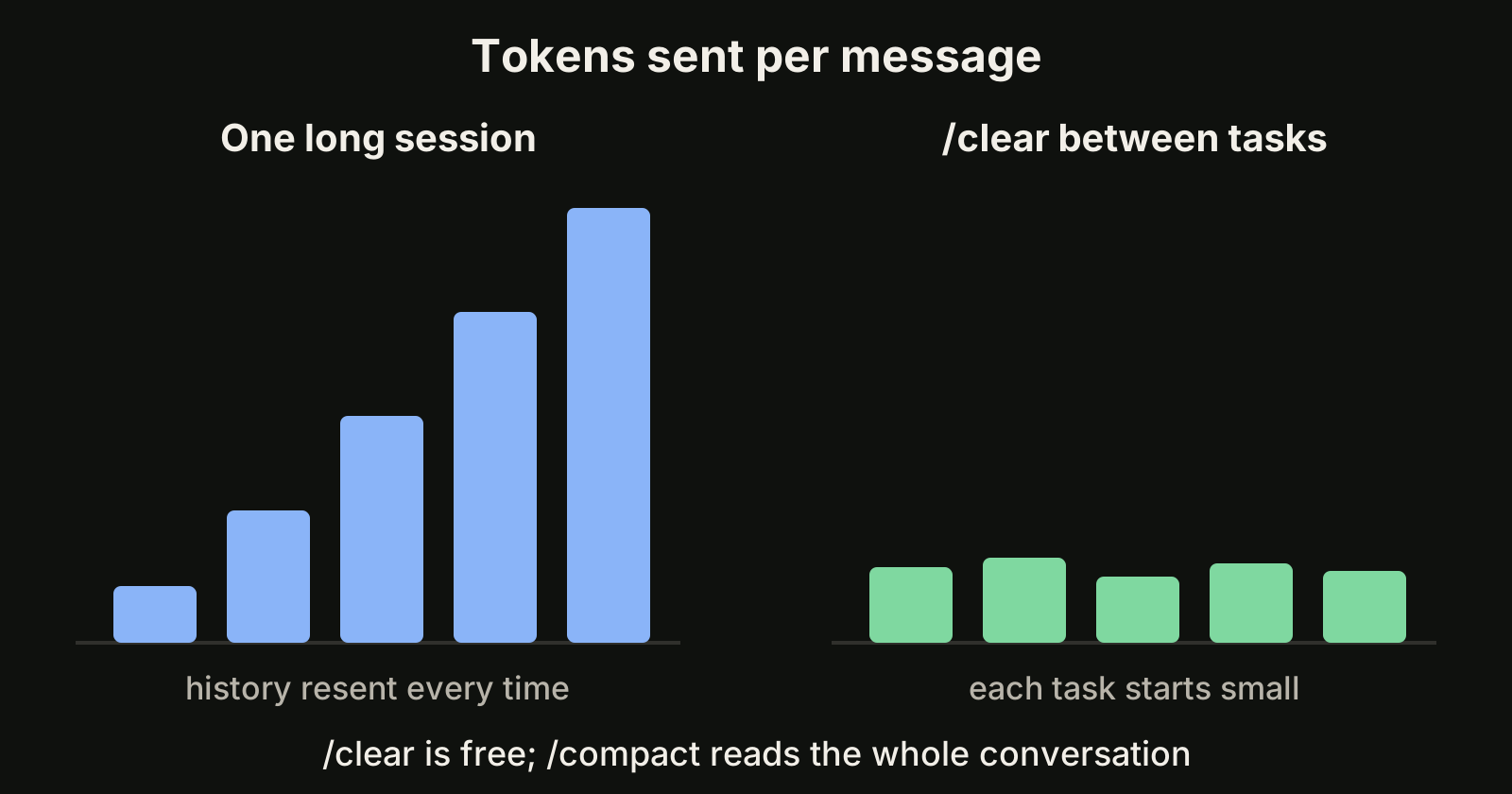
- Clear between tasks. Stale context is resent with every message. Use
/rename, then/clear, and/resumelater if you need the old session back. A/clearcosts nothing;/compactreads the whole conversation it summarizes. - Match the model to the job. Sonnet handles most coding work for half the Opus rate. Switch with
/model, and give simple subagentsmodel: haiku. See Claude Code models. - Lower the effort level with
/effortfor simple tasks. Thinking tokens bill as output tokens. - Watch the context. Run
/contextto see what fills the window. Our context window guide explains what survives compaction. - Prefer CLI tools over MCP servers where one exists (
gh,aws,gcloud), and disable unused servers in/mcp. - Move workflow instructions out of CLAUDE.md into skills. CLAUDE.md loads every session; skills load on demand. The docs suggest keeping CLAUDE.md under 200 lines.
- Delegate verbose work to subagents. Test runs and log processing stay in the subagent's context; only a summary returns. See Claude Code subagents.
- Filter output with hooks. A PreToolUse hook can trim test output to failures before Claude reads it.
- Write specific prompts and use plan mode. "Improve this codebase" triggers broad scanning; a named file and function does not. Press Escape early and use
/rewindwhen the direction is wrong.
Also watch for background usage. The docs name scheduled tasks, goal check-ins, agent teammates and cache misses after a break as reasons usage climbs in an idle session. Agent teams can use about 7 times more tokens than a standard session when teammates run in plan mode.
Where VibeiDE fits
VibeiDE is a desktop app that coordinates the Codex, Claude Code and OpenCode CLIs you already installed, and each user signs in to their own provider accounts, so subscriptions, usage and costs stay separate from the VibeiDE license. Its usage display shows provider-reported usage, remaining runway and reset countdowns where the provider reports them. Each project has its own task queue with a parallel limit per provider; those slots control how many processes run at once and do not raise a provider allowance. Read more about Claude Code rate limits in VibeiDE or Claude Code orchestration.
Takeaways
- Claude Code is included in Pro ($20 per month), Max (from $100) and Team and Enterprise seats; on the API every token is billed, as of October 2026.
- Enterprise averages are about $13 per developer per active day and $150 to $250 per month on API billing.
/usageshows a local, list-price estimate per session; the Claude Console shows the bill.--max-budget-usdcaps headless runs, but leave headroom.- The biggest savings come from
/clearbetween tasks, Sonnet as the default model and lower effort for simple work.